History
The MIT Tier-2 computing center was proposed in 2005 as a computing center to be build at MIT for the Compact Muon Solenoid (CMS) experiment to support the U.S. High Energy Physics community. After its initial years in the basement of building 24 it quickly moved to to the better supported server rooms in building W92. However after a few years the location showed its limitation and with the expected growths a new and hopefully final location had to be found.
After seemingly endless discussions and intense searches for a final location the School of Science agreed to fund the construction of the High Performance Research Computing Facility (HPRCF) at the Bates laboratory in Middleton, MA, just about 20 miles up North.

In 2009, after a relatively short construction period, one of the large rooms at Bates had been converted to a facility that would house 70 water cooled modern racks with a capacity of 12 kW per rack. A switch initially with a 10 Gbps direct connections to the ESNet hub in Cambridge and the LHCOne network in Manhattan followed and made the facility a top spot for computing equipment for the CMS experiment. Over the years the facility received a number of upgrades, like the addition of two 100 Gbps fibers, and the massive UPS system for the critical racks.
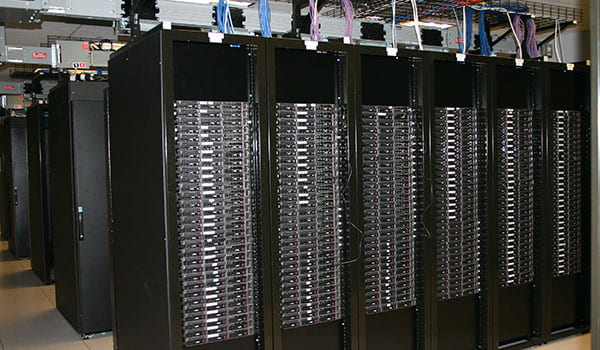
After over fifteen years of successful operation, the infrastructure is in need of major upgrades. In January 2025 a new chiller was installed putting the cooling capabilities of the site back on stable grounds. More upgrades will have to come.
Organization
The team of the MIT Tier-2 Computing Center comes together once a week on Wednesday at 11am and discusses the status and the general planning. Meetings are documented in cleo and usually will have a web site in our local indico instance to collect performance plots.
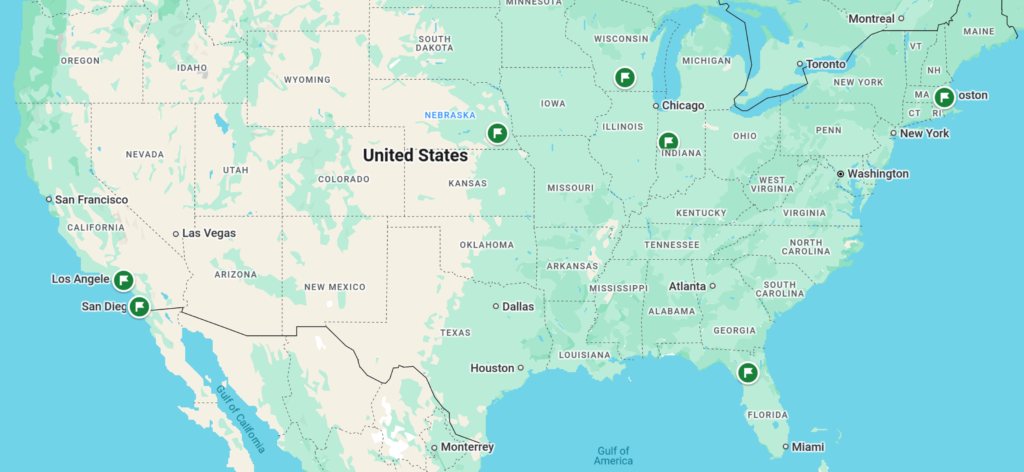
Once a month the US CMS Tier-2 community meets. There are 7 US CMS Tier-2 sites going East to West: MIT, Florida, Purdue, Wisconsin, Nebraska, UC San Diego and CalTech.